
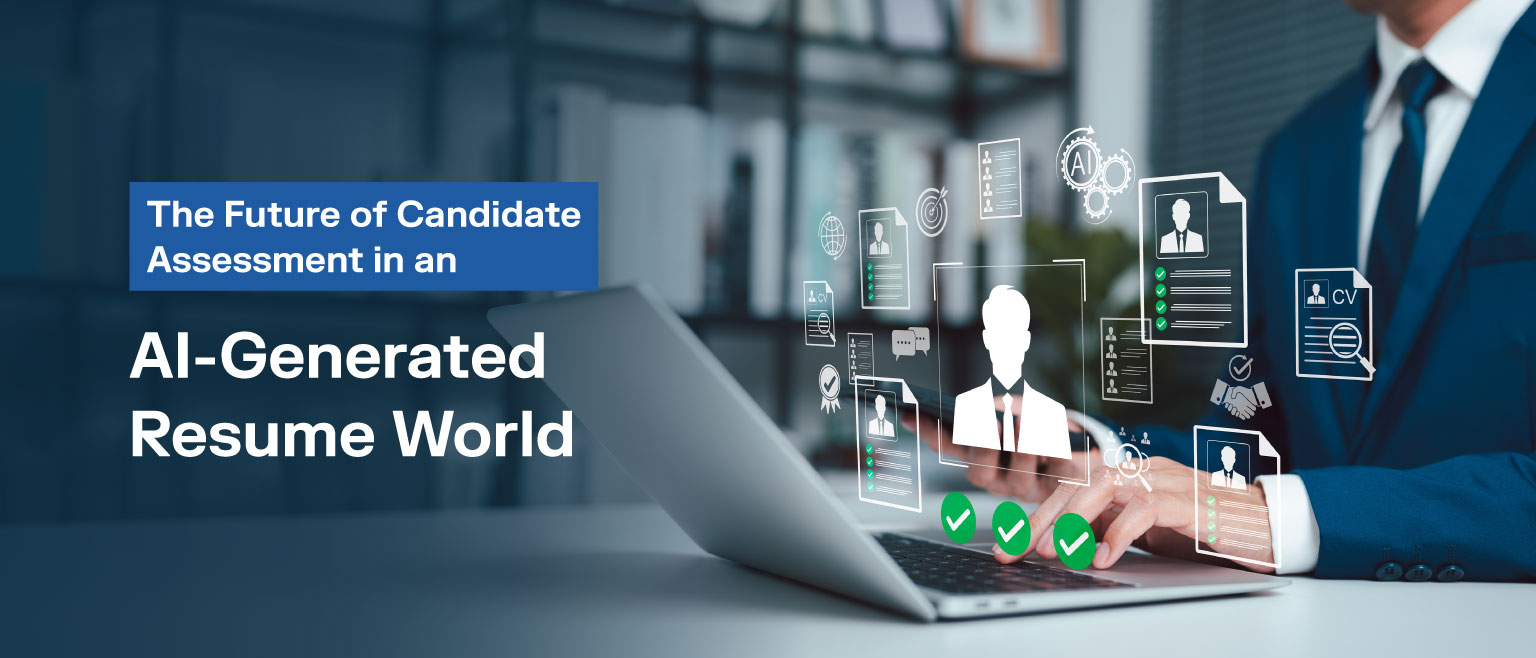
The Future of Candidate Assessment in an AI-Generated Resume World
Recruiters used to spend a lot of time looking at resumes. A good resume can tell you about a person’s work history, what they have done, and what they can do in the future. Things are changing now. Computers can help people make resumes, cover letters, and job applications that are very good. This makes it easier for people to apply for jobs. It makes the recruiter’s job harder. But when all the applications look great, how can the employer know if the person is good at what they do?
Just because we have technology, it does not mean we should not use it. We need to change the way we look at people’s skills.
The Resume’s Role as the Ultimate Gatekeeper is Diminishing
When people hire someone, they usually start by looking at resumes. The recruiter checks what the person can do, looks at their work history, and searches for words. Resumes were never perfect; they give you an idea of what someone has done, not what they can do. Computers have made this more true. Now recruiters see perfect applications every day. These applications say all the things and match what the job needs. But even if the application is good, the person may not really know what they are doing. Because of this, the resume is becoming what it was meant to be, an opening to a conversation, not the only way to evaluate talent.
Hiring Is Shifting from “Tell Me” to “Show Me”
One big change in the way people are hired is that companies are looking more at what people CAN do, not just what they SAY they can do. Employers want to see proof that people have the skills they need. For software developers, this might mean showing the code they have written or doing practical assignments. For people who work in marketing, it might mean showing their portfolios or analyzing the campaigns they have worked on. For people who want to be leaders, companies might use business situations to discuss cases and ask them what they would do in certain situations.
The Rise of Skills Validation
As AI is making perfect job applications, many companies are looking for structured methods to evaluate people who apply. They use skills tests, technical challenges, certifications, work samples, portfolio reviews, and behavioral evaluations to help them decide whom to hire. This is not about making it harder to get a job. It is about making the hiring process more accurate. Organizations want confidence that candidates possess the capabilities required to succeed, regardless of how their application materials were created.
AI Is Changing Both Sides of the Hiring Equation
Interestingly, employers are using AI just as actively as candidates. Recruitment teams are leveraging AI to automate administrative tasks, identify relevant talent pools, improve candidate matching, and streamline screening processes. According to recent workforce research, organizations using AI in recruitment report significant efficiency gains, allowing recruiters to spend more time engaging with candidates and less time on repetitive tasks.
However, the most successful organizations are not using AI to replace recruiters. They are using it to make recruiters more effective. Technology can identify patterns, but it cannot fully assess curiosity, resilience, communication skills, leadership potential, or the human qualities that often determine long-term success.
Authenticity Is Becoming a Competitive Advantage
There is a common assumption that AI will make it harder for candidates to stand out. In reality, the opposite may be true. As AI-generated resumes become commonplace, authenticity becomes more valuable. Candidates who can discuss real projects, explain how they solved business problems, showcase tangible results, and demonstrate continuous learning are often easier—not harder—to identify. When everyone has access to the same technology, genuine expertise becomes the differentiator. This is one reason many employers are placing greater emphasis on portfolios, certifications, practical exercises, and meaningful conversations during the hiring process. Some organizations are even reducing their reliance on traditional cover letters altogether in favor of more direct demonstrations of capability.
The Future Is More Human Than Many Expect
The rise of AI has sparked countless predictions of hiring. Yet one trend is becoming increasingly clear: the future of candidate assessment is not about removing people from the process. It is about helping people make better decisions. The organizations that build the strongest teams will combine technology with thoughtful human evaluation. They will use AI to improve efficiency, but they will continue to rely on human judgment to understand potential, ambition, adaptability, and cultural fit.
While technology can help candidates tell their stories more effectively, it is still people who determine how those stories translate into real-world success.
Related Blogs
Learning Is No Longer an HR Function. It’s a Business Strategy
For decades, learning and development was largely viewed through the lens of human resources. Training calendars were prepared, programmes were conducted, attendance was recorded, certifications were issued, and completion percentages…

Building Human-Centric Organizations in an AI-Driven World
Artificial Intelligence is redefining the way organizations operate, accelerating innovation, improving decision-making, and transforming business processes across industries. While technology continues to evolve at an unprecedented pace, one principle remains…
Why Simulation, Emulation, and vSoC Could Be the Missing Link in India's Semiconductor Mission
Over the past few months, industry forums, technology conferences, government engagements, and strategic discussions with stakeholders have provided deep insights into the current state of the semiconductor ecosystem. Whether engaging…