

Technology at the Core: Evolving at Lightning Speed, Staying True to the Basics
From a background in government advisory, policy formulation, and regulatory frameworks, one learns how policies shape industries and how the right regulations can accelerate innovation. These foundational principles of strategy, governance, and execution are just as vital today. In the technology services sector, these principles are being applied from a new vantage point: inside the engine room of technological change.
Today, in our work leading the technology practice at Judge India Solutions, with a focus on semiconductors, automotive, electronics, Industrial IoT, AI/ML, and embedded engineering, we apply those same principles from a different vantage point: inside the engine room of technological change.
The shift over the last decade has been remarkable. In the automotive and electronics sectors, semiconductors have gone from being invisible enablers to becoming the very foundation of progress. Industrial IoT now connects machines and processes seamlessly. AI/ML algorithms are no longer research curiosities; they are embedded into production, safety, and customer experience systems. Embedded engineering ensures that all these layers communicate reliably and securely. We’re building smarter cars, intelligent factories, and connected devices that speak to each other in real-time. We’re creating systems that learn, adapt, and make decisions faster than any human could. The semiconductor is no longer a silent component hidden deep inside a circuit; it is the driver of change, the core around which entire ecosystems are built.
Yet, despite this rapid evolution, one truth has never changed: technology must serve the end user.
Every department, whether product design, manufacturing, supply chain, or after-sales support, exists to deliver value to the customer. The most advanced AI platform, the most efficient IoT network, or the fastest chip means little if it fails to make the user’s experience better.
In our work, the question is always: How will this impact the customer? Whether a policy or a product, we know that success depends on human experience. We’ve found that technology projects succeed not just because they were technically brilliant, but because they were designed with empathy for the user. We’ve also seen promising innovations falter when they lose sight of that basic principle.
The future will bring even greater convergence, such as AI embedded into vehicles, industrial IoT connecting production floors across continents, and semiconductors becoming more adaptive than ever. But a timeless principle that will always hold is:
“If the customer is not happy, the technology is not complete.”
Technology is the engine; user experience is the steering wheel. Without both in harmony, we risk moving fast but going nowhere meaningful.
At Judge India Solutions, that’s the mindset we bring to our engagements, ensuring that the future we build is not just advanced, but also human.
Related Blogs
Learning Is No Longer an HR Function. It’s a Business Strategy
For decades, learning and development was largely viewed through the lens of human resources. Training calendars were prepared, programmes were conducted, attendance was recorded, certifications were issued, and completion percentages…

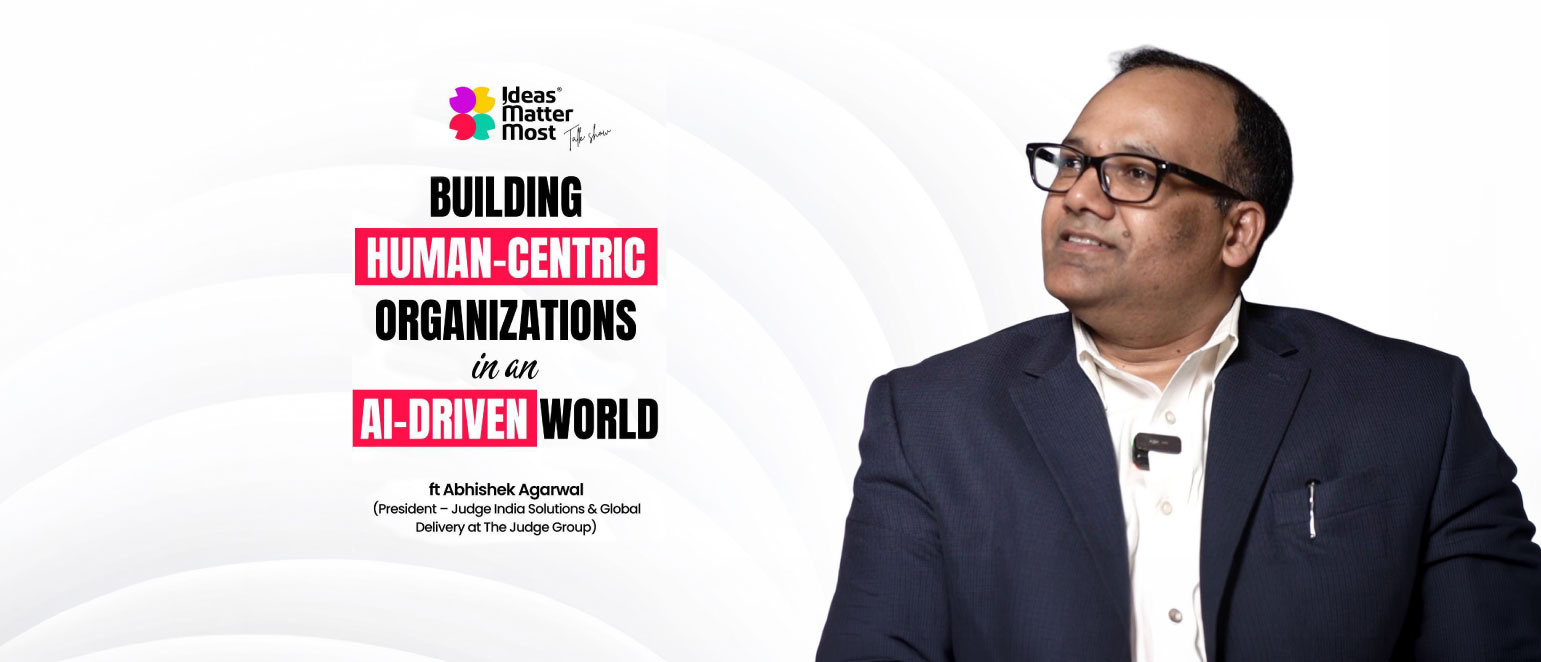
Building Human-Centric Organizations in an AI-Driven World
Artificial Intelligence is redefining the way organizations operate, accelerating innovation, improving decision-making, and transforming business processes across industries. While technology continues to evolve at an unprecedented pace, one principle remains…
The Future of Candidate Assessment in an AI-Generated Resume World
Recruiters used to spend a lot of time looking at resumes. A good resume can tell you about a person’s work history, what they have done, and what they can…